

The Medical devices -in English, medical devices- are devices, tools and applications that have a medical-health purpose.
The Medical devices share with the medicines the health purpose. However, unlike medicinal products, these articles do not have a principal pharmacological action.
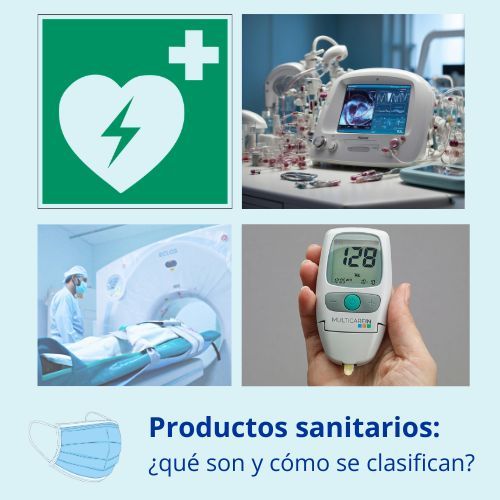
Medical devices: 3 areas where to find them
The Medical devices on the Spanish market are subject to the Regulations (EU). Today, these items are already part of our daily lives. In fact, sanitary products can be found in all the places we visit on a daily basis:

At home
Examples of PS that can be found at home:
- Digital thermometers
- Sphygmomanometers
- Dressings and gauze
- Pregnancy test
- Contact lenses

In hospitals
Examples of HCWs that can be found in a health centre:
- Blood pressure monitors
- Infusion pumps
- Prosthesis
- X-ray equipment
- Surgical material

In everyday life:
Examples of PS that we use in our daily lives:
- Masks
- Condoms
- Wheelchairs
- Hearing aids
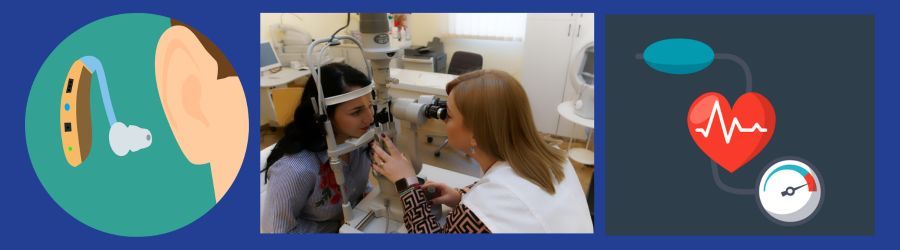
Classification of Medical Devices according to their risk
There are various ways of classifying medical devices. However, at the regulatory level, there is a classification based on their risk, which includes the following typologies:
- Class I → Low risk
- Class IIa → Moderate risk
- Class IIb → Medium-high risk
- Class III → High risk

Examples of Medical Devices, according to their risk classification:
- Within the Class I PS would find items with a low risk, such as: bandages, prescription glasses.
- Within the Class IIa of PS, there will be products with a moderate risk such as: hearing aids.
- Within the Class IIb PS, with a medium-high risk, we find devices such as: respirators.
- Within the Class III of PS, i.e. high-risk items are classified as: pacemakers.